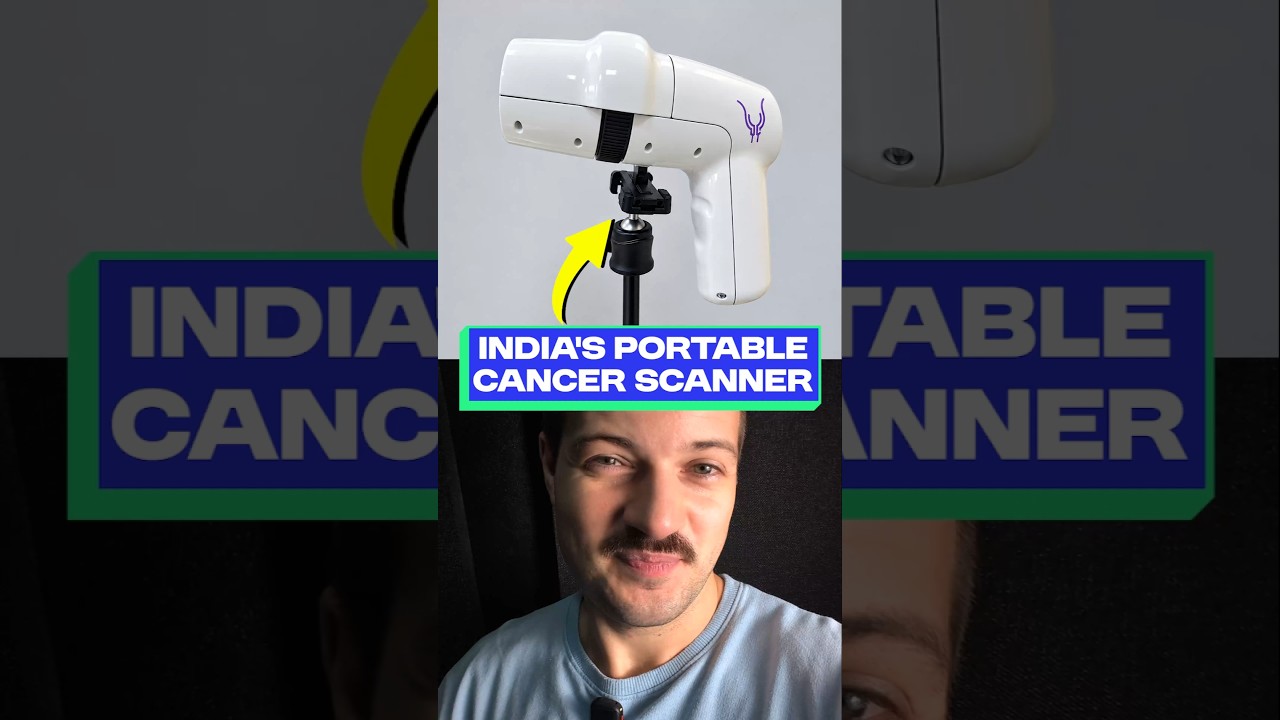
Point-of-Care Cervical Cancer Screening: How GrivaVision Is Closing India's Colposcopy Gap

Cervical cancer remains one of the most preventable cancers in the world, yet it continues to be one of the leading causes of cancer death among women in India. The tools to catch it early — colposcopy chief among them — have existed for decades. What has been missing is access: a colposcope that performs at international imaging standards but is priced, built, and serviced for the realities of Indian healthcare, from tier-1 hospital OPDs to a screening camp in a district with no reliable power backup.
GrivaVision was built to close that gap.
The Trade-Off Clinics Have Lived With
Most colposcopes sold in India today are imported. That brings two consequences for the clinics and distributors who buy them: a price point that puts the device out of reach for many smaller clinics and NGOs running screening programs, and a service and support chain that runs through an international supply line rather than a local one.
The result is a diagnostic bottleneck. Cervical cancer screening guidelines depend on colposcopy to confirm and localize lesions found on visual inspection or Pap smear — but if the device to do that is expensive, hard to service, or simply unavailable outside major cities, the screening pipeline breaks down long before treatment ever becomes a question.
What a Digital Colposcope Needs to Do Well
At its core, a colposcope has one job: give the examining doctor a clear, magnified, well-lit view of the cervix, so they can identify abnormal tissue with confidence. A digital colposcope adds a second job — capturing that view as an image or video that can be scored, stored, shared, and referred to later.
Doing both well requires three things to work together: optical quality, an interface that doesn't get in the doctor's way during the exam, and a physical design that can actually travel to where the patient is — which, for a large share of India's at-risk population, is not a well-equipped hospital.
Inside GrivaVision: Built for Diagnostic Accuracy
GrivaVision is built around a 2K Sony CMOS image sensor, with support for 4K capture when paired with a tablet capable of it. That sensor is the foundation for everything downstream — lesion borders, vascular patterns, and tissue texture all depend on getting a clean, high-resolution image in the first place.
On top of the raw image, GrivaVision applies real-time contrast enhancement (built on CLAHE — Contrast Limited Adaptive Histogram Equalization) that brings subtle vascular patterns into sharper view during the exam itself, rather than requiring post-processing later.
The device also has Swede scoring built directly into its workflow. The scoring interface sits inside the same screen the doctor is already using to examine the patient, so there's no separate paper form or second system to reconcile afterward. The score itself is still entered by the doctor — GrivaVision does not yet offer automated, AI-assisted lesion scoring, and any future move in that direction will go through proper clinical validation before release.
Every exam can be saved as a set of annotated images, and the device can also record video of the full procedure, giving clinicians a complete record for referral, second opinions, or patient counselling.
Designed for the Field, Not Just the OPD
A colposcope that only works well in a well-resourced hospital isn't solving the access problem — it's just moving it. GrivaVision's physical design reflects that.
The device supports hands-free capture, so the doctor can stay focused on the patient and the procedure instead of reaching for a screen mid-exam. It's compact and mains-powered, and the full kit — device, portable stand, and carry case — weighs in around 4–5 kg, light enough for a field team to carry between screening stations in a single outreach camp. A weighted stand is also available as an alternative for clinics where the device stays in one place.
GrivaVision connects to any Android or Windows device — phone, tablet, or laptop — over a direct hotspot connection, so there's no dependency on a hospital's Wi-Fi network or internet access to run an exam. A tablet can be supplied with the device for clinics that don't already have a compatible screen on hand.
Indian-Made, Globally Benchmarked
GrivaVision is developed and assembled in India, incubated at AMTZ — the Andhra Pradesh MedTech Zone in Visakhapatnam, described as the world's largest integrated medical technology manufacturing cluster. The device has drawn non-dilutive government funding from MeitY, ICMR, and the Technology Development Board, alongside direct government backing of the company.
On the regulatory and quality side, GrivaVision is a CDSCO Class B medical device, manufactured under an ISO 13485-accredited quality system, and the company is DPIIT recognized. Every device ships with a one-year warranty plus a further year of comprehensive maintenance cover, with servicing coordinated through the distributor network and carried out at the company's facility in Vizag.
The combination is the point: imaging performance built to match what doctors expect from international brands, in a device that's made, supported, and priced for the Indian market — without the cost structure that comes with importing.
Where GrivaVision Fits
In practice, GrivaVision is designed to move across two very different settings without compromise in either:
- Hospital and clinic OPDs, where colposcopy is part of routine gynecological care and the device needs to integrate into an existing patient workflow — including hospital HIMS integration where required.
- Outreach and camp-based screening, where cervical cancer screening programs bring diagnostic capability directly to communities that would otherwise have to travel to access it, and where a device has to be genuinely portable and quick to set up.
That dual fit is why GrivaVision is being placed through a distributor network built around gynecology and gynec-oncology expertise, with a dedicated team running in-person demonstrations for doctors so that clinics can see the imaging quality and workflow for themselves before making a decision.
Frequently Asked Questions
Is GrivaVision an imported device?
No. GrivaVision is developed and assembled in India, though it uses some imported components, such as the camera module, that are integrated into a device built and finished domestically.
Does GrivaVision use AI to detect lesions automatically?
Not currently. GrivaVision gives doctors a high-resolution, contrast-enhanced view and a built-in Swede scoring interface, but scoring is entered by the examining clinician. AI-assisted detection would require dedicated clinical validation before being offered as a feature.
Can GrivaVision be used without an internet connection?
Yes. The device connects to a phone, tablet, or laptop over a direct hotspot, so exams don't depend on Wi-Fi or internet access — useful for outreach camps in areas with limited connectivity.
Does GrivaVision run on battery power?
GrivaVision currently runs on mains power. A portable battery option is under exploration for future release.
What certifications does GrivaVision hold?
GrivaVision is a CDSCO Class B device, manufactured under an ISO 13485-accredited quality system, and the company is DPIIT recognized.
What does the warranty and service cover include?
Every device includes a one-year warranty plus a further year of comprehensive maintenance cover (CMC/AMC), with service coordinated through the distributor and carried out at the company's Vizag facility.
Bring Advanced Cervical Screening Anywhere
GrivaVision exists to remove the trade-off between imaging quality and accessibility in cervical cancer screening. If you're a clinic, hospital, or screening program evaluating colposcopy equipment, our clinical applications team can walk you through a live demonstration of the device in use.